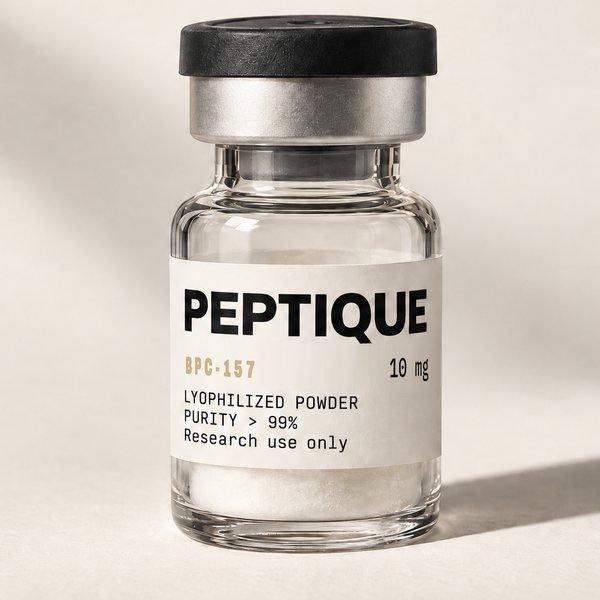
- CAS Number
- 137525-51-0
- Molecular Weight
- 1419.5 g/mol
- Purity
- 99%+ by HPLC
Research peptides
BPC-157
Synthetic pentadecapeptide for cellular signaling and biochemical stability studies. 10 mg and 20 mg.
This catalog is for qualified researchers only. Confirm your eligibility to continue.
By entering, you affirm that every statement above is true and accept our Terms and Privacy Policy. Your confirmation is recorded with a timestamp, a reference number and the version of this notice (RUO-2026.11), and it is attached to any order you place. What we record.
Peptique products are supplied for in vitro laboratory research only. Not for human or veterinary use, not for use in diagnostic procedures, and not evaluated by the U.S. Food and Drug Administration. Not drugs, foods, dietary supplements or cosmetics. Nothing on this site is a dosing, administration or treatment instruction, and no statement here is intended to diagnose, treat, cure or prevent any disease.
Home / Catalog / Research peptides / GHK-Cu
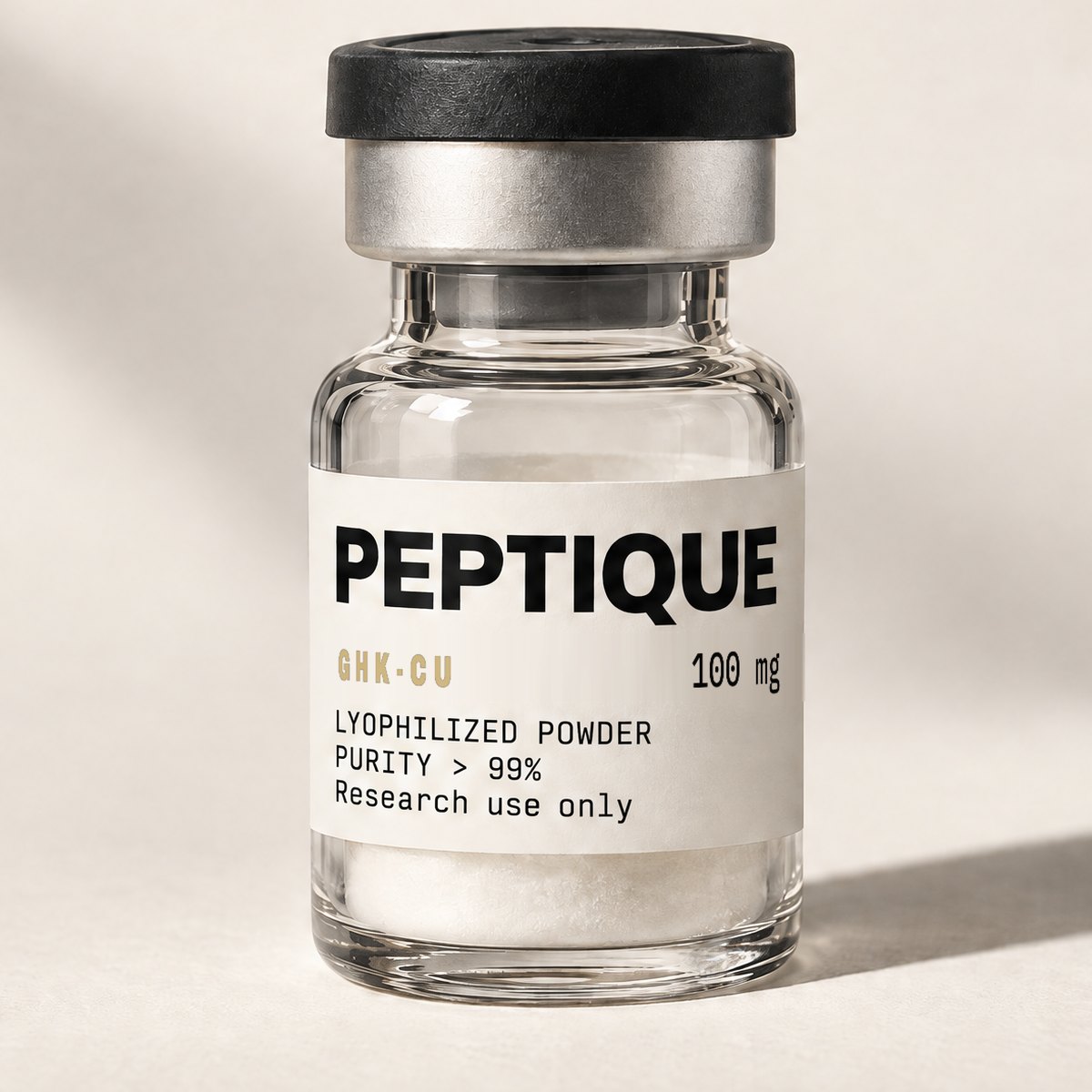
Peptique research catalog
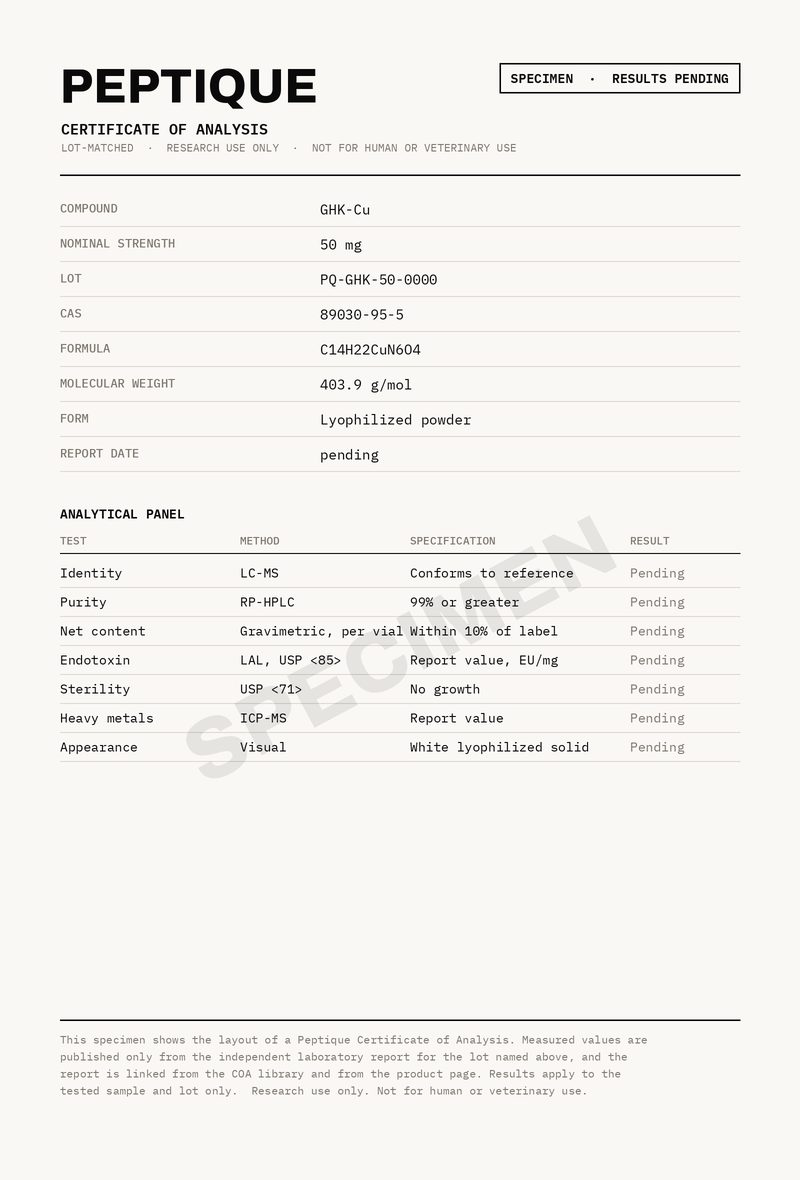
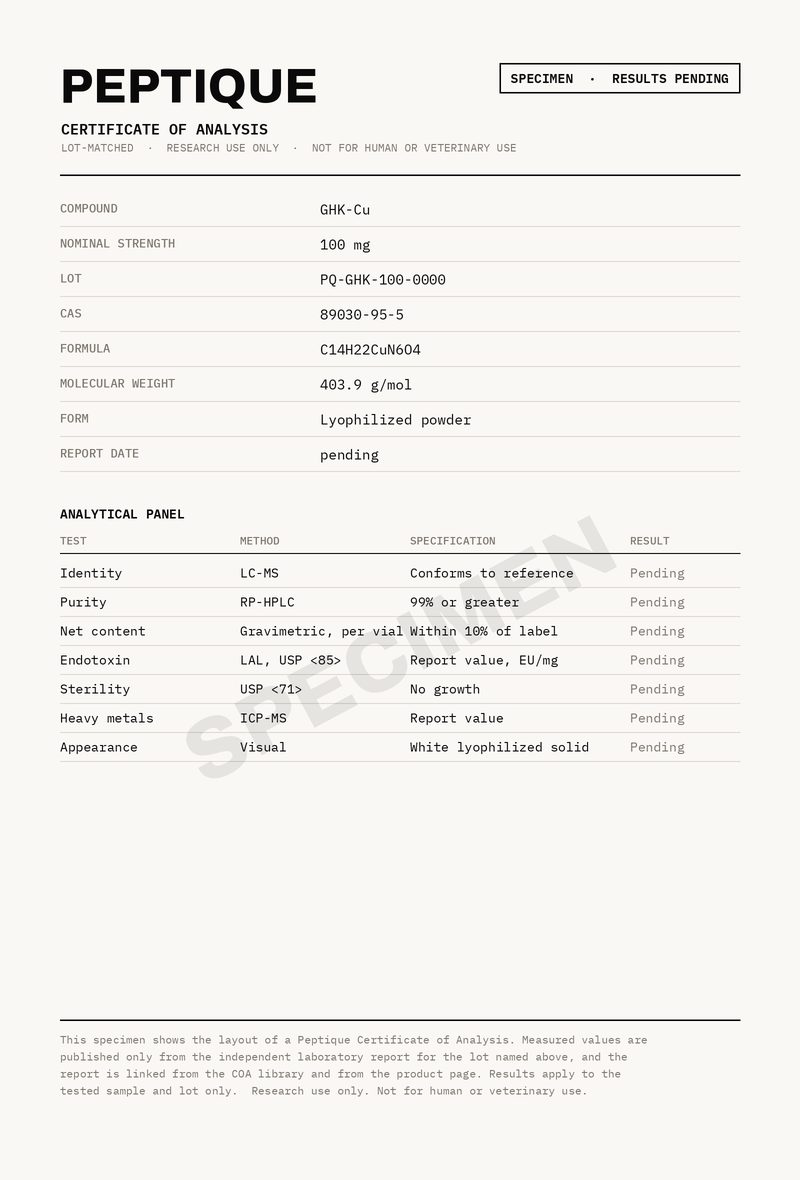
CAS 89030-95-5 · Copper tripeptide complex
In stock. Order in --:--:-- and it ships today.
100 mg · Single vial · $0.59 per mg · SKU PQ-GHK-100
Format
Strength
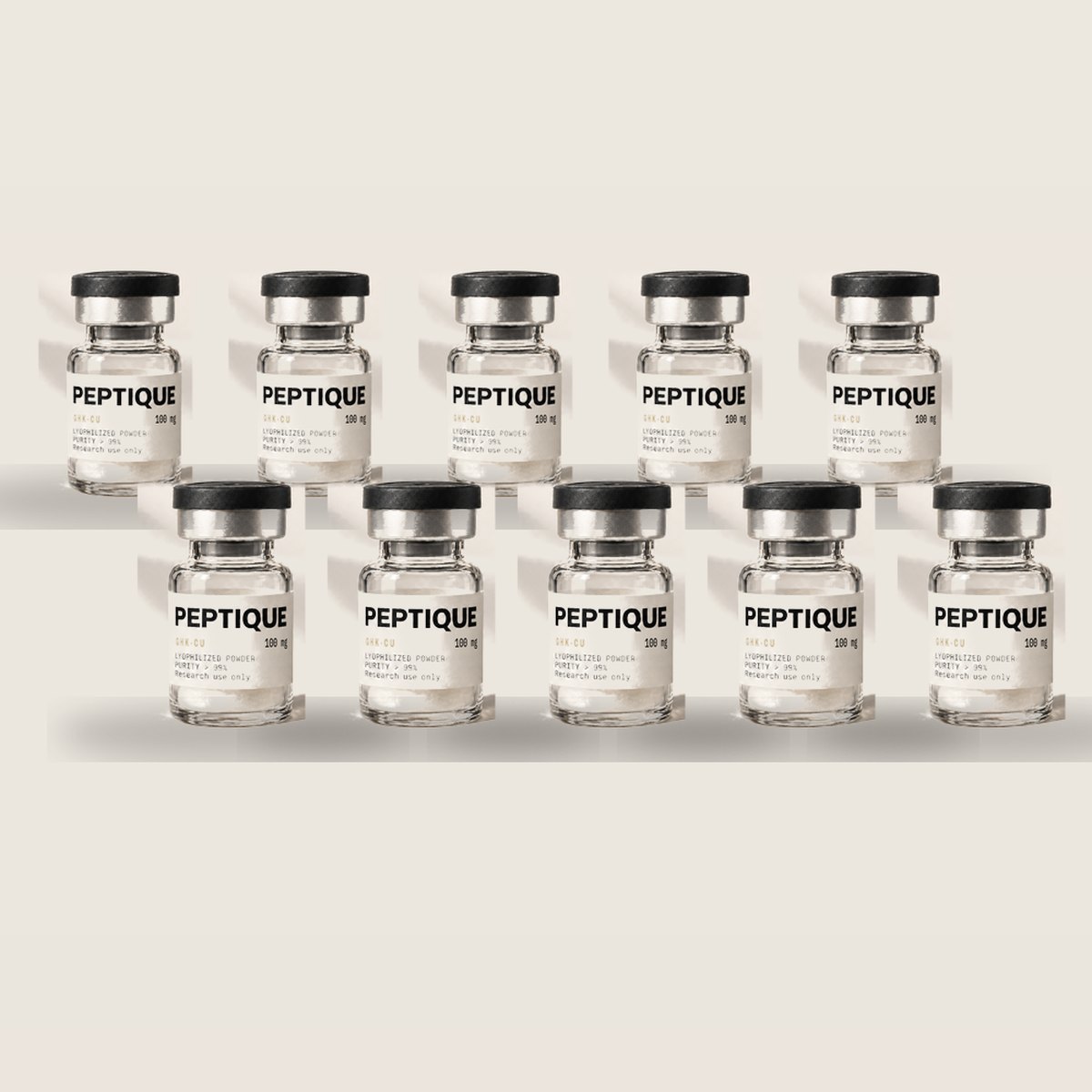
One lot, ten labeled vials, one carton. Price per vial shown below.
Subscribing on this selection saves $106.20 a year against the one-time price.
Charged per delivery at the locked price. Skip, pause or cancel at any time from the account page. Subscriptions are for laboratory research materials and carry the same Research Use Only terms as a one-time order.
BOGO Vials shipped: 2 (1 paid, 1 free)
Sealed bench reagent for dissolution and analytical work. Peptique does not sell syringes, needles, swabs or any product used to prepare an administration.
Peptique supplies compounds for controlled laboratory research and analytical work.
Where applicable, Peptique research materials are supplied as a lyophilized solid.
Storage requirements vary by compound and lot. Refer to the label and the lot documentation.
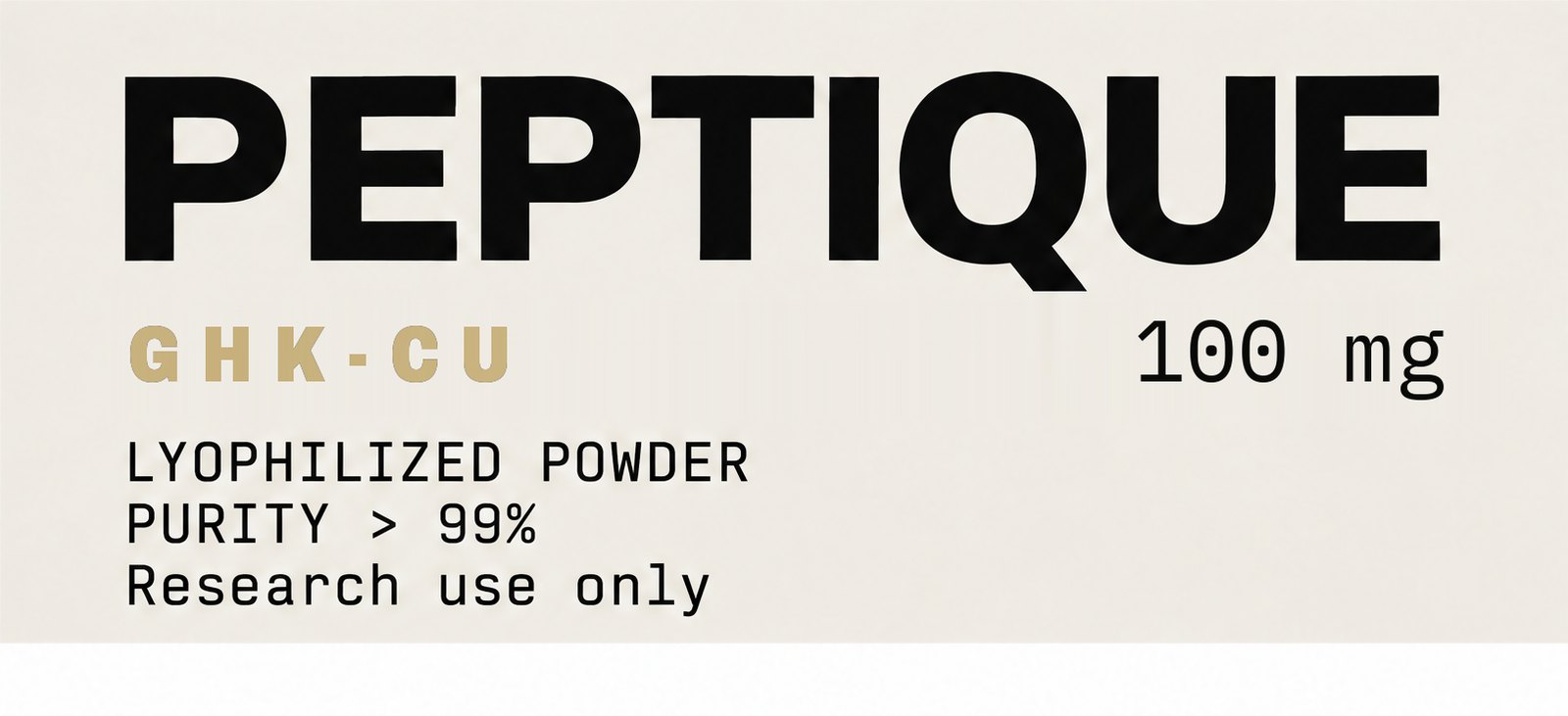
Packaging components can vary slightly between production lots, including closures, caps and label placement.
For laboratory and research purposes only. Not intended for human consumption, diagnostic use, therapeutic use, or administration to humans or animals.
View documentation →Research material · GHK-Cu
GHK-Cu is the copper(II)-coordinated form of the tripeptide glycyl-L-histidyl-L-lysine, studied in biochemical and molecular research on peptide-metal coordination, copper-binding chemistry and peptide structure-function relationships. Peptique supplies it as a lyophilized research material with a lot-matched Certificate of Analysis.
GHK-Cu is a copper-peptide complex formed when the tripeptide GHK, sequence glycine-histidine-lysine, coordinates a copper ion. The defined three-residue sequence together with its coordinated metal gives laboratories a distinct molecular system for work on peptide chemistry, metal binding, complex formation and analytical characterization.
Researchers should distinguish between the underlying GHK peptide and its copper-coordinated form when keeping analytical records and interpreting results. Peptique supplies the copper complex, GHK-Cu, strictly as a laboratory research material. The scientific information on this page describes compound identity and areas of published investigation only.
Accurate compound identification and lot-level documentation are the two components a controlled study depends on. The identifiers below locate the public record for the reference substance; the lot report characterizes the material in the vial.
The first residue of the defined GHK sequence.
The central residue, whose imidazole side chain contributes the functional group relevant to metal coordination.
The third residue, completing the tripeptide and its molecular identity.
Coordination with copper(II) produces the complex referred to as GHK-Cu and adds the metal-interaction variable to peptide research.
Controlled analytical systems examining coordination between the GHK peptide and copper under defined conditions.
A defined molecular model for interactions between a peptide ligand and a coordinated metal ion.
Experimental models investigating measurable signaling variables associated with the complex.
Comparisons of GHK, GHK-Cu and related materials to examine how metal coordination changes measurable characteristics.
Supplied for use within appropriate research environments by personnel familiar with laboratory procedures, material identification, contamination control and experimental documentation.
Suited to laboratory workflows that call for a defined, documented research material inside an established experimental protocol.
Suited to controlled procedures where the researcher independently determines material suitability for the assay in hand.
Product identity and lot information support organized laboratory recordkeeping and later review.
Researchers remain responsible for selecting handling procedures and contamination-control practices.
Research conclusions should rest on the analytical documentation for the specific production lot being evaluated. General product-page information is not a substitute. The lot report records:
Confirm the compound, the selected strength and the lot identifier on the label.
Open the lot's report in the COA library and confirm the lot number matches.
Read the laboratory, the sample identifiers, the methods and the reported measurements.
Keep the product, lot, analytical, receipt and storage records with your research documentation.
GHK-Cu is supplied exclusively as a laboratory research material. It is not offered or represented as a medicine, pharmaceutical preparation, dietary supplement, cosmetic or consumer product.
For laboratory research use only. Not intended for human or veterinary use, administration, ingestion, injection, personal experimentation, pharmaceutical compounding, pharmacy preparation, diagnostic, therapeutic or clinical use. Nothing on this page is medical advice or a claim to diagnose, treat, cure or prevent any disease.
Product reference
Product information as listed in the Peptique catalog record.
Analytical data
| Purity | 99%+ by HPLC, lot report published |
|---|---|
| CAS Number | 89030-95-5 |
| Molecular Formula | C14H22CuN6O4 |
| Molecular Weight | 403.9 g/mol |
| Amino Acid Count | 3 |
| Sequence | Gly-His-Lys, copper(II) coordinated |
| Synonyms | Copper peptide GHK-Cu; Cu-GHK; glycyl-histidyl-lysine copper complex |
| Physical Form | Lyophilized solid |
| Solubility | Soluble in bacteriostatic water; consult the lot report for solvent notes. |
| Storage | Store lyophilized at -20C, protected from light and moisture. |
Analytical documentation
Every released lot has a Certificate of Analysis from an independent laboratory, published in the COA library and linked here by lot. Results apply to the tested lot only. Match the lot on your vial to its report.
View analytical documentation →Match the documentation to the compound, the strength and the lot identifier on the label.
Identity by LC-MS, purity by RP-HPLC, net content per vial, endotoxin, sterility, heavy metals and appearance.
Keep the product and lot documentation with your research records for the life of the study.
Lots for this product
Specimen documents show the certificate layout with results pending. Measured values are published only from the laboratory report for the named lot.
Fulfillment
Shipping options and delivery estimates are shown at checkout. Orders placed before 2PM EST on a business day ship the same day from our U.S. facility with tracking. Free shipping on orders over $300.
Card, bank transfer and crypto are presented at checkout. A 21+ researcher attestation is part of every order.
UPS 2-Day or USPS Priority by default, discreet plain carton, tracking number by email. Photographed and weighed before dispatch.
Use the label and the lot documentation for storage guidance. Report visible transit damage within 7 days with photographs of the carton and the label.
Continue exploring
Research peptides
Synthetic pentadecapeptide for cellular signaling and biochemical stability studies. 10 mg and 20 mg.
Research peptides
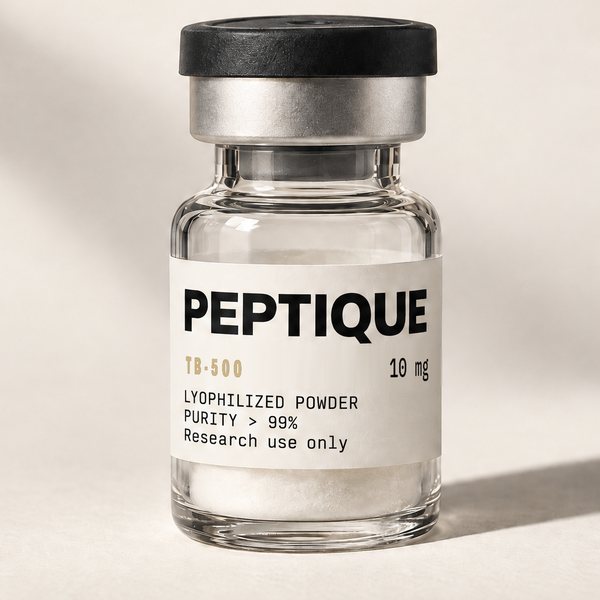
Synthetic thymosin beta-4 fragment for cellular migration and protein interaction studies. 10 mg.
Research peptides
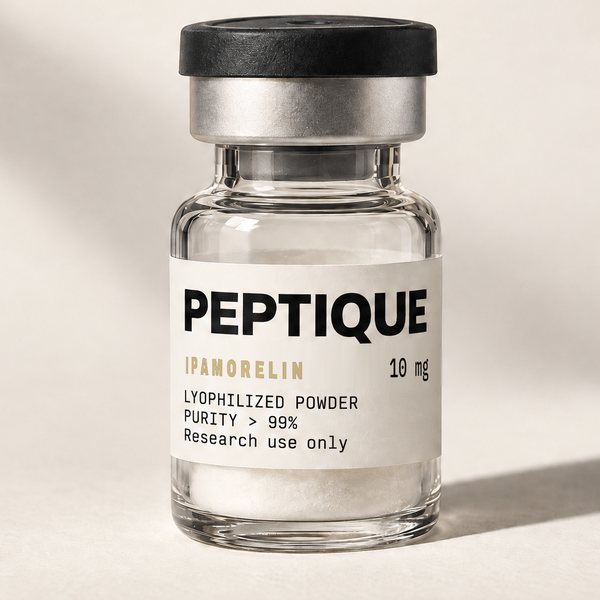
Synthetic pentapeptide for GHS-R interaction and peptide signaling studies. 5 mg and 10 mg.
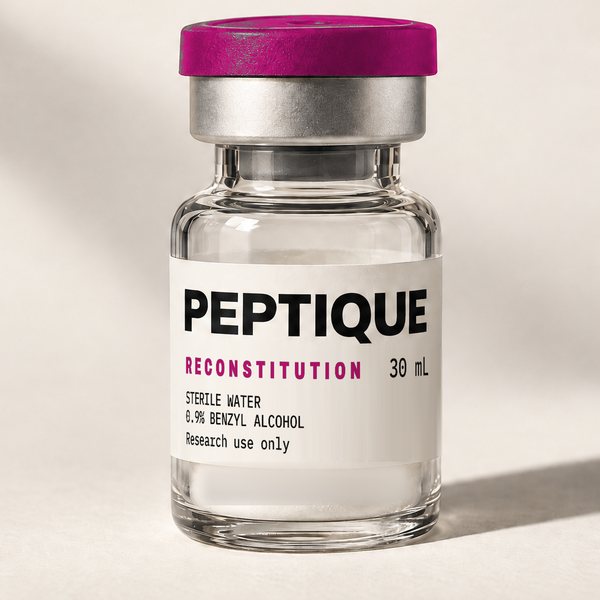
Lab supplies
pH-balanced aqueous research diluent, 0.9% benzyl alcohol. 3 mL, 10 mL and 30 mL vials, singles and packs.